
Today at church, I mentioned a two-sided handout titled “My Identity in Christ.” It simply states Scriptures that reveal who we have become and are becoming as we come into a saving relationship with Christ.
Certainly a lot there to meditate upon!
Today at church, I mentioned a two-sided handout titled “My Identity in Christ.” It simply states Scriptures that reveal who we have become and are becoming as we come into a saving relationship with Christ.
Certainly a lot there to meditate upon!
I learned a new word recently… MOOC. It stands for Massive Open Online Course. This is the concept of a course of instruction that is offered online to a potentially unlimited audience. I have participated with a MOOC without even knowing the name!

In the past, I have written about taking classes through Coursera. I took one history class from Princeton that had 80,000 students. It seems that the idea of MOOCs is adjusting and adapting. The concept has not been as easy as originally touted. Students have not found the environment as engaging. Costs of infrastructure have been high. And retention rates have been low. Yet I still believe that MOOCs will adapt and become fairly common as these problems are overcome.
Perhaps it is time for you to try a MOOC? Check this out – mooc-list.com. It is a clearinghouse for MOOCs offered from various portals.
Maybe you would like to take a free class on genetics, public speaking, or global health? With hundreds of courses offered, there is something for everyone. Make this part of your learning plan for the coming year!
There is a popular American saying, “Forgive and forget.” While this may be some good psychological advice, it is not practiced regularly in the Bible. Before, I hear an outcry, let me explain.
This morning, I was reading Matthew 1. Matthew, being Jewish, wishes to demonstrate the Hebrew roots of Jesus the Messiah. He does this by writing the genealogy of Jesus. Genealogies in the Bible can often be the dry recitations that we skim over and move on. Today something jumped off the page at me.
In the genealogy, Matthew lists 42 generations leading up to Jesus. For the most part, fathers are listed, but there are four mothers who are also counted. They are Zorah, Rahab, Ruth, and Bathsheba. These women are listed because they are unique; two of them being non-Jewish! However, Bathsheba is the one that really caught my attention. It is because her name itself is not mentioned.
Matthew lists her this way, “David was Solomon’s father, whose mother had been Uriah’s wife” (Matt. 1:6). Now that is an interesting way to say this. Why not say, “Solomon’s mother was Bathsheba?” It seems that God wants us to remember David and Bathsheba’s indiscretion. You remember the story. David did not go to war and saw Bathsheba bathing across the valley. He called the woman to himself and then slept with her. She became pregnant and then the cover-up began. In short, David had Bathsheba’s husband, Uriah, killed in a military battle. It is one of the oldest records of fragging or friendly fire on human record.
It is as if God wants us to remember that Jesus came from this line of people who were broken and sinful. No whitewashing here. God announces something like, “Jesus came from the likes of David and Bathsheba who sinned.”
We want everyone to quickly forget and scrub from the record our past. We hope they will forget the stupid things we say, the bad business decision we authorized, the lack of compassion exercised, or hurt caused. God seems to have a different idea. His idea is certainly to forgive – and wow, David is our biggest example of this. Thoroughly forgiven, greatest king from Israel’s past. But the record of his sin lives on. The story of God forgiving the murdering and adulterous king named David lives on! Perhaps God does this as a signpost for the rest of us?
There is great liberty here. It is a reminder that our past can be forgiven, and that we can be changed. Even if the darker scenes of our past are remembered by men, they can be forgiven by God through Christ. They don’t become our greatest moment, but they point to God who is constantly demonstrating his greatest moment, His Son on a cross for the redemption of the world.
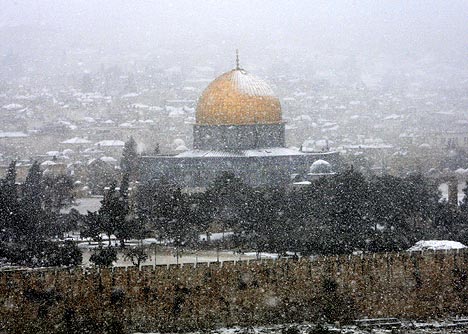
A foot of snow fell in Jerusalem over the weekend. This is a “once every 5o years experience” in Jerusalem. Here’s a few fun pictures.
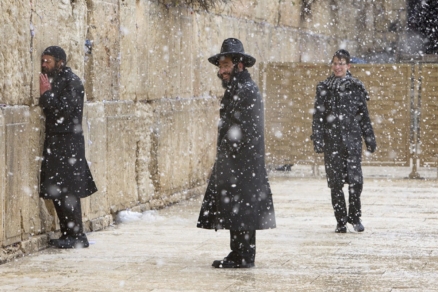
Men at the Western Wall
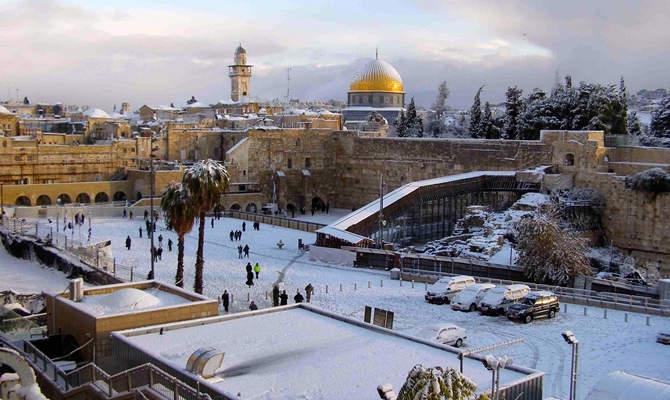
Jerusalem sits at 2577 feet above sea level. High enough for an occasional snow, but it is certainly not common. Contrast this with Mount Hermon all the way to the north at 9,232 feet. Most are surprised to hear that there is even a ski hill there!
Snow is mentioned 23 times in the Bible; and predominantly in three ways. Snow is first mentioned as the cold stuff that falls on the ground. “He spreads the snow like wool and scatters the frost like ashes” (Psalm 147:16) and “He says to the snow, ‘Fall on the earth,’ and to the rain shower, ‘Be a mighty downpour.’ (Job 37:6) Often times in this sense, snow is thought of as something extraordinary from the hand of God.
Second, snow is thought of in the sense of cleansing. Isaiah says, “Though your sins are like scarlet, they shall be as white as snow; though they are red as crimson, they shall be like wool.” Snow is considered something so pure as to show contrast to disease or sin.
And third, snow is attributed to the purity of Christ. “The hair on his head was white like wool, as white as snow, and his eyes were like blazing fire.” Revelation 1:14.
I imagine that it was pretty exciting to be in Jerusalem for this big snowfall. I heard it shut the city down. No snowplows in that city!
This is a story about Monopoly boards and life. Last Sunday at church, I showed this powerful YouTube video from a talk given by John Ortberg. Lots of people said that they wanted to see it again. So here goes.
I don’t think much commentary is needed for the video. It is a great reminder about life. Not how much we acquire but how we handle what is entrusted to us.
I will be teaching a class on How to Study the Bible in a few weeks. In preparation, I have been reading lots of books, papers, and articles on the subject.
I give kudos to Clint Archer who wrote this really simple approach to Bible study and interpretation.
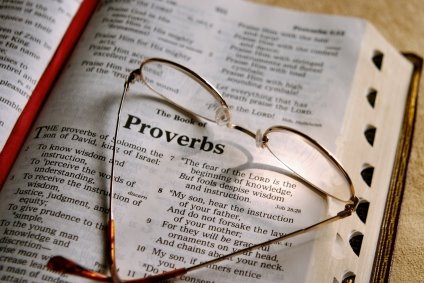 how to study the bible – clint archer
I’m reminded of the most basic principle of Bible study that rings in my ears from a seminary professor, “We are reading someone else’s mail!” We always have to back up and ask who were the original hearers and why this writing was important to them!
A friend recently introduced me to the Forefather’s Monument. He gave me this YouTube video in which Kirk Cameron and a monument “expert” explore the monument.
I thought to myself, “Why is it that I have never heard of this national treasure?” Upon doing a little exploration, the “Pilgrim Monument” was dedicated in 1889. I discovered that it is the world’s largest solid granite monument, and is the third-tallest statue in the United States. That is sayin’ something. But the monument languishes in the national memory.
Our forefather’s sought to make something that would enshrine certain values for future generations. They sought to pass along what they held dear so that we would remember how they built such a durable and dynamic society.

Faith – Key Figure in Forefather’s Monument
The monument features a 36-foot tall granite colossus titled, Faith, surrounded by smaller (15-foot) allegorical statues depicting Liberty, Education, Law, and Morality, as well as several relief panels. The relief panels seek to inform each one of the granite figures.
The main “lady” is Faith. She holds her finger heavenward and has a well-used book of the Scriptures. These are the sources of her guidance and power. She has a star on her forehead depicting that she has received knowledge or enlightenment.
One of her chief beliefs is that knowledge from God will be transmitted to personal morality. But she has no eyes. For her purpose is to look inside. Morality is only established as faith breathes down into the heart establishing the compass for right and wrong. She has holds the 10 Commandments and another Biblical scroll in her hands. Faith and morality are received from God’s story and how He has revealed himself in the Scriptures.
Of course, there is much more! Makes me very inspired to visit this monument one day!
Fall is here… although I know that many are still hoping for a few more sunny days. Fall is here not just with the weather change, but with the order and structure that happens. Vacations are finished, kids are back in school, a new sense of order descends upon life.
I have talked with many people recently that welcome fall for this very reason. Order is good. In fact, there is even a rhythm to fall that can bring growth. Perhaps this is not only felt in the local school but also in the life of a church.
Each September all kinds of new things happen in a church. New Bible studies begin. There are new opportunities for serving. Kids come back to Sunday school and practice for the Children’s Christmas musical.
This year, I’m asking each person at my church to simply ask God one question. “What is your next step for me?” Regarding my life, What would be most pleasing to you God? For some this will mean joining a Community Group (we call them cGroups) to meet with others to share life, pray, and study the Bible. For others it will mean attending a class that will help you walk with God more closely or equip you for greater service (we call this c_Learning). Still others need to move into the game and learn how to use their gifts and talents to serve others (we call this c_Impact).
As a pastor, I can never answer this question for people. In fact, we are all different and grow in different ways. But I do know this, God has a best “next step” for you. Fall is the perfect time to ask that important question, “What is your next step for me?” Hear, then obey. Your life will be better for it.
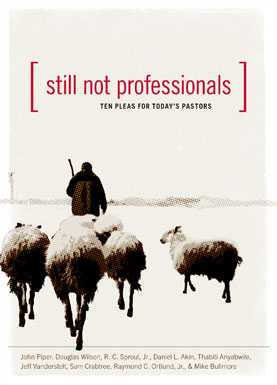 One of the most interesting reads of my summer was a collection of articles about the true calling of pastors of the gospel. The series of articles is called Still Not Professionals: A Plea for Today’s Pastors (Desiring God, desiringGod.org).
Here’s the series in pdf format.
Paul told the Thessalonian Church,
Having so fond an affection for you, we were well-pleased to impart to you not only the gospel of God but also our own lives, because you had become very dear to us.
9 For you recall, brethren, our labor and hardship, how working night and day so as not to be a burden to any of you, we proclaimed to you the gospel of God. 10 You are witnesses, and so is God, how devoutly and uprightly and blamelessly we behaved toward you believers; 11 just as you know how we were exhorting and encouraging and imploring each one of you as a father would his own children, 12 so that you would walk in a manner worthy of the God who calls you into His own kingdom and glory. I Thessalonians 2:8-12
Paul reveals his heart. Pastoring God’s people is about life spent with them. It is about care that costs you. It is personal. It is hard at times. Yet it is believing that God is doing a work that is truly supernatural.
John Piper and friends capture this in their short articles. They capture the intimate nature of our work.
At the same time, they rebuke the antiseptic style of our age in which pastors often times run away from the sheep. They place up barriers and moats around their castles with the hope that they will never have to really engage life-on-life. This is far from Biblical pastoring. Paul even declares their missionary band (Paul, Silas, and Timothy) were like tender mothers and encouraging fathers. This is never done at arms-length.
Enjoy this good set of writings – especially if you are a pastor, elder, or Christian worker. Be challenged with your calling.
 I’ve got a plant in my yard. I call it the “grenade weed.” When I touch it, the plant explodes and sends all these little bomblets into the surrounding soil.
Originally I guessed the plants name was “weedus grenadus,” but I did look it up. It is bittercress. This is a common weed in the spring and early summer. I bet you have it in your yard.
What a defense mechanism this plant has. Under threat, it explodes and lays dozens more mini-mines for the future.
I have known some people in life who are bittercress – Under pressure and ready to explode. May God come in tenderness, compassion, and power to defuse the bittercress of the world.


 Brian Boone