Jerusalem for Imax – Stunning!

Check out this really cool video of Jerusalem (and surrounding locations in Israel) that is being filmed right now for Imax.  The project is called “Jerusalem” and it is being released in 2013 in 3D for Imax screens.  Really spectacular!

Here’s the website that explains all about the film – www.jerusalemthemovie.com.


The Provision of God

Let me take one more opportunity to talk about leadership in the Book of Numbers.  Moses and the people are such an interesting case study.

Remember the scene.  They are wandering in the desert.  Supplies are pretty scarce.  But God has provided this bread like substance called manna.  It falls from the sky like clock work.

But the people seem to have developed a more discerning pallet.  They are quite tired of manna.  The people have demanded meat!  And they remember those glorious years in Egypt when they had meat.  Perhaps they should have never left…. how short is our memory of what slavery is really like.

Moses next asks God, “Where can I get meat for all the people?” (Numbers 11:13).  Moses does not understand the mighty hand of provision from God  Even after witnessing the Exodus and parting of the Red Sea, Moses is still wondering how “Moses can provide” instead of how God can provide.  How easy it is for us to take “provision responsibility” back from God.

Isn’t this the same situation that Jesus’ disciples encountered when they wondered where they would get enough food to feed the 5,000 (Matt 14:13-21).

In Numbers, God’s response to the people is amazing.  He tells them, I’ll give you meat all right!  You will have it for a whole month – “until it comes out your nostrils and you loathe it” (11:19).

Moses still does not get it.  He asks God, “Is there enough flocks and herds?  Would there be enough fish if we caught all the fish in the sea? (11:22).  Moses still has his eyes on what he can legitimately provide – not what God is able to provide.  God’s response to Moses is telling, “Is the Lord’s arm too short?”

The provision arrives.  Not flocks, not fish…. Quail.  Millions of them that fly right into the camp.  They appear as mysteriously as locusts.

The place where they camped was Kabroth Hattaveh which means “the graves of craving.”  What a telling name!

This story is about two things.  First it is about having an appetite for something that God fundamentally says we don’t need.  And second, it is about leaders who forget that God richly cares for his people and does not need our “help.”


Gethsemane

This is Passion week.  It is the week that Jesus spent in Jerusalem prior to His death.  The Bible records that Jesus spent the week interacting with his disciples, Jewish leaders, and the masses who followed him.  Here’s an excellent resource that graphically depicts the events for the week – Holy Week Timeline.

The week ends with Jesus all alone in a place called Gethsemane.  It is a garden area at the foot of the Mount of Olives.  The place literally means “oil press.”  How significant since the Son of God will be significantly “pressed” on this night preceding His death.

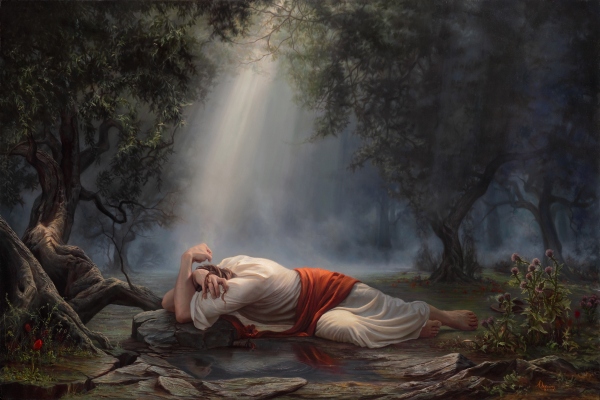
Jesus at Gethsemane

This is an awesome picture of what the scene at Gethsemane might have looked like.  I like this image because it captures some of the anguish.  You have probably seen other images of Jesus looking resolutely up to heaven.  The Bible does not depict it to be this tranquil or serene.  It pictures Jesus in agony.  Why?

“And being in anguish, he prayed more earnestly, and his sweat was like drops of blood falling to the ground” (Luke 22:44).  Jesus is in anguish.  Something has Him so consumed that He is literally sweating blood.  What has brought this man who has seemed quite able to handle any situation literally to His knees?

The Bible tells us the answer.  “Father, if you are willing, take this cup from me; yet not my will, but yours be done” (Luke 22:42).  Jesus knows that God the Father is sending Him to the cross.  And at that cross all of the wrath of God will be poured out onto Jesus for the sins of the world.  In this instant, the One who has known perfect communion with God and has never performed any sin will literally bear the weight of all sins!  Can you see why Jesus says, “If you are willing, take this cup from me.”  If there is another way, please find it!

We all know the answer.  God knew that there was no other way to remedy the problem of sin.  A perfect sacrifice had to be made.  The sacrifice would be His son.

Having read this story many times, I have often said that Gethsemane was harder for Jesus than the crucifixion.  It was at Gethsemane where He wrestled, it was at the cross where He submitted.

This is the old, old story.  It is the story of Jesus who went down, down, down to death.  Death he did not deserve.  It was a death motivated by love.

And His death will ultimately result in life.  That is the story of Easter.  Jesus breaks the bonds of death, not just for Himself, but for all who find Him and glory in His sacrifice.

We cannot have an Easter without going through a tomb.  Somber words.  But never truer.


More Leadership in Numbers

In my last post, I wrote about my study in the Book of Numbers.  I love this stuff!  Let me reflect a little more about some leadership principles from Moses and the people as they spent time in the wilderness.

“Now the people complained about their hardship in hearing the Lord” (Numbers 11:1).   What?  Moses was hearing just fine. And all the people really had to do was watch the cloud over the tabernacle – right?  The pillar of cloud moved by day and fire by night.  So their only real job was to “watch.”  But they seem to be expressing some jealousy that Moses is the only guy “hearing God.”  They want a piece of the action.

And so for the first time since entering the wilderness, God’s anger was aroused.

The narrative moves on saying, “The rabble with them began to crave other food.”  I wonder who ‘the rabble’ were?  Just the grumblers?  Or trouble-makers?  And it now appears that their concerns have moved from their ears to their stomachs!  And something interesting happens next.

God is so angry with the people that Moses seems to snap.  Moses asks God, “Why have you brought this trouble to your servant?  What have I done to displease you that you put this burden of all the people on me?” (11:4).

Isn’t this interesting?  People grumble and Moses feels the burden.  I can truly relate to this.  But when it is Moses, I can easily say, “that is not your burden Mo’.  Give it back to God who is leading you!”  People grumbling can always be stressful times for leaders. But in this case, and many such similar times, the people are grumbling against God more than they are the leader.

It is amazing to see God’s response.  His solution for Moses is a mighty one.  He asks Moses to bring 70 elders to Him.  And at the tent of meeting God meets those leaders.  He spread the “spirit that was on Moses onto them” (11:16).  And here is the powerful phrase, “they will help you carry the burden of the people, so that you will not have to carry it alone.”

And so God spreads out the leadership gift but also the leadership “burden.”  Perhaps this is one of the chief reasons God saw fit for each church to have a multiplicity of elders and pastors?  The burden can become too much for the leader who has not learned to share and give away some of the responsibility.

If you are a leader (especially in a church) not doubt at some time you will feel that people are unhappy about something.  It is great to ask, “Is this a burden God wants me to feel or one that He solely wishes to handle?”  And it is also good to take advantage of the other leaders around you.  Solicit them to prayer.  Listen to them carefully.  Make sure that you use the tools God has provided.


Leadership in Numbers

I think a lot about leadership.  It seems like so many organizations rise or fall on good leadership.  But since it is a hot topic of conversation, there are usually a myriad of different opinions about what constitutes “good leadership.”  For me, there is no better place to explore this than the Bible.

Recently, I have been listening to the Bible read out-loud to me.  I reported a few months back that I am using YouVersion on my Droid.  I have been listening to the Book of Numbers.  Some fascinating stories have emerged about being a good leader and follower through the Israelites time in the wilderness.

Tabernacle covered by smoke or fire

Let me set the table.  Israel has just been removed from Egypt by God.  Moses is the leader appointed by God to lead them out of Egypt and into the desert.  As instructed in the Law, they have built a portable worship center called the Tabernacle.

The tabernacle was covered in a cloud by day and by what “looked like fire” by night (Num 9:15-16).  The Israelites followed the cloud of God wherever it led.  By the Lord’s command either they camped or set out (9:23).  So Israel camps periodically in one location and then moves.

In the desert was a whole lot of uncertainty.  Scorching heat, stinging scorpions, durst storms, a lack of water, and bands of marauding Amalekites all made desert travel a formidable challenge.  And let’s face it, the Israelites had been “city folk.”  They had been in Egypt where these were not their challenges (not to make slavery out to be a picnic).

Into the story comes an odd character named Hobab.  Remember Moses’ father-in-law, Reuel.  He was the one who took in Moses when he fled Egypt.  And Moses had been treated well by Reuel.  Reuel had a son named Hobab and he was with Moses during these days. Hobab saw that the tabernacle was moving into the desert but he was going back to his land and his people.  Moses desperately wants Hobab to go with him and promises him a share of “whatever good” the Lord gives to us (10:29-30).

But then we see Moses’ true motive.  Moses says, “Please do not leave us.  You know where we should go in the desert, and you can be our eyes.”  (10:31).  Uh-oh.  I thought God was the one leading in the desert.  I thought God in essence was “the eyes.”  So why is Moses hanging onto Hobab?

Don’t we all have a Hobab in our lives?  God has promised to lead us, but we want the security blanket of Hobab.  We want the guy “who has been there,” the earthly veteran. Hobab knew the desert in a way that Moses did not.

I wonder how God felt about Moses’ desire for Hobab?  The Bible never does say.  But I can imagine that God was shaking his head.  Come on Mo’.  I’m with you!  I am your eyes, your ears, your feet.  Can you need anything more?

We all have Hobab moments.  Who is your Hobab?  And how is God wanting you to cut him loose?


Local High School Baseball

Ben Roquet - EW

I’m a big fan of local baseball.  I’ll be coaching a Little League team this year, Sparta’s minors through Pacific Little League.

But I also love high school baseball.  That is the pinnacle for many local baseball athletes. Lots of fond memories for me as a player (yes years ago), and as a parent watching lots of games.

With technology, there is some good news. Both local high school teams will be utilizing software called Gamechanger to broadcast live play-by-play results from the games.  Here’s how it works.  A scorekeeper at the game as an app on their phone.  They follow the game scoring it into their phone which is transferred to the game Gamechanger website.

People who are registered with GameChanger can either have live updates emailed or texted to them.  Or they can actually watch a little baseball diamond onscreen that has the play by play.  Pretty cool.

Chris Jenkins - Mavs

To register and follow along, get a Gamechanger account on the web: http://www.gamechanger.io/.  You do need to get an account using an email and password.  Then find the local teams online that you want to follow.  Download the app on your iPhone or droid and you are good to go.

Let’s play (and watch) some baseball!


Developing a Worldview

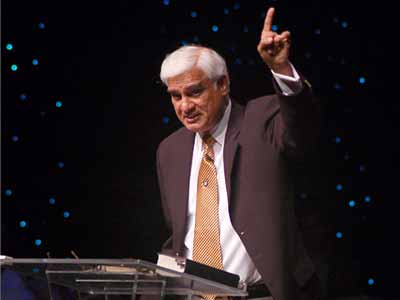
Ravi Zacharias

I have been talking with a friend recently who is asking questions about life.  There are times in all our lives where we stop the treadmill and ask what this is all about. Is there more than just this daily routine?

I’m reminded of something that I first heard from Ravi Zacharias years ago.  Ravi is a friend and one of my favorite Christian theologians.  Ravi says that there are four pieces that make up a person’s world view.  They are:

  1. Origin – How did I come into being?
  2. Meaning – What brings life meaning?
  3. Morality – How do I know right from wrong?
  4. Destiny – Where am I headed after I die?

Of course, people might answer those questions quite differently.  But to have a coherent worldview, it should hold up to six important inquiries.

  1. The worldview must have a strong basis in correspondence to  that which is factual.
  2. There needs to be a high degree of coherence.  It should hold together without contradicting itself in areas.
  3. The worldview should have explanatory power.  It should correspond to what we actually perceive, feel, and experience in life.
  4. The worldview should avoid two extremes, will not be too simplistic (ie. atheism) or too complicated (ie. pantheism.)
  5. The worldview should have more than one line of evidence.
  6. The worldview should have have the ability to explain the similarities and differences in other world views.

This is some heady stuff, but oh how important.  I’m wondering how you might answer the questions of origin, meaning, morality, and destiny?  Are those clear in your mind, or a bit muddy?

It is a good thing to explore this!  In fact, it might be one of the most important endeavors of your life.  I’m reminded of the writer of Proverbs;

Choose my instruction instead of silver,
knowledge rather than choice gold,
for wisdom is more precious than rubies,
and nothing you desire can compare with her.

Proverbs 8:10


The Nimble Nature of a Small Group

I recently heard a man speak about why a small group that meets in a home and regularly studies the Bible, prays, and cares for another is so powerful.  In a word, he said that the small group has the unique power to be nimble.  It can change each week according to what the group most needs at that moment.  Here’s a few of the expressions that the group can take.

First is family, and perhaps this one is expressed most often.  It is the family which can be together, enjoy life, and be in relationship.  Second is the hospital.  The small group can drop everything and care for one member when it is warranted.  Third is the school.  There are times at which the group must move forward in learning, growing, and being stretched.  And finally the group can become the army.  They become this when the join forces in some way to give, influence, or offer help that takes them all working cooperatively together.

I have stories from my life when a small group has been all of those for me.  And I have loved each of season.

Let’s celebrate the power of coming together under Jesus to form groups like this that can morph and change at the leading of the Spirit to accomplish such lofty yet tangible expressions.


Boeing is Adding Workers

Boeing is retooling with younger manufacturing workers.  Right now 25% of Boeing’s workforce is eligible for retirement.  Another 25% will be within the next five years.  As a result, Boeing and other aerospace companies in the PNW have teamed with Edmonds Community College to provide a twelve week course to prepare the next generation for aerospace manufacturing and assembly.  The program is called the Washington Aerospace Training & Research Center (WATR).

To learn more, go to http://washingtonaerospace.com.  The course lasts twelve weeks with part of it online and the other part in the classroom and lab.  Students learn about drilling, riveting, wiring, and how to operate tools and complete assembly paperwork.  Students graduate with two valuable certifications.  The cost for the course is $4800 and is eligible for a student loan.

This is a fantastic opportunity for some people who are not afraid of some training and hard work.


Facebook: https://www.facebook.com/WATR.EDCC


Consider Americorps

I recently spoke with a fine young lady that I know who just returned from a ten-month stint with Americorps (http://www.americorps.gov/about/programs/nccc.asp). She participated on a team that served areas hit by floods, tornadoes, and children afflicted with AIDS.  She returned with a beaming smile and a grateful heart.

During her stint with Americorps, she had all of her expenses paid and she earned a college credit of roughly $5500.  I’m not saying that this is the primary motivation to serve, but is a nice benefit.

In the church, we too often think of creating our own programs, rather than joining existing ones.  Why is this?  What might it be like to rub shoulders with other kids from all across the US who are learning to serve.  What a platform to speak of why we serve! (Mark 10:45).  Sure, they do not operate from a totally “Christian grid” but that’s increasingly our world.

I have met a lot of young people who are finishing high school and asking, “what’s next?”  For many, taking tenmonths to roll up their sleeves and clean up the wrecked homes of others would be good for the mind, body, and soul.  And it could never hurt to earn a few bucks for college too.